
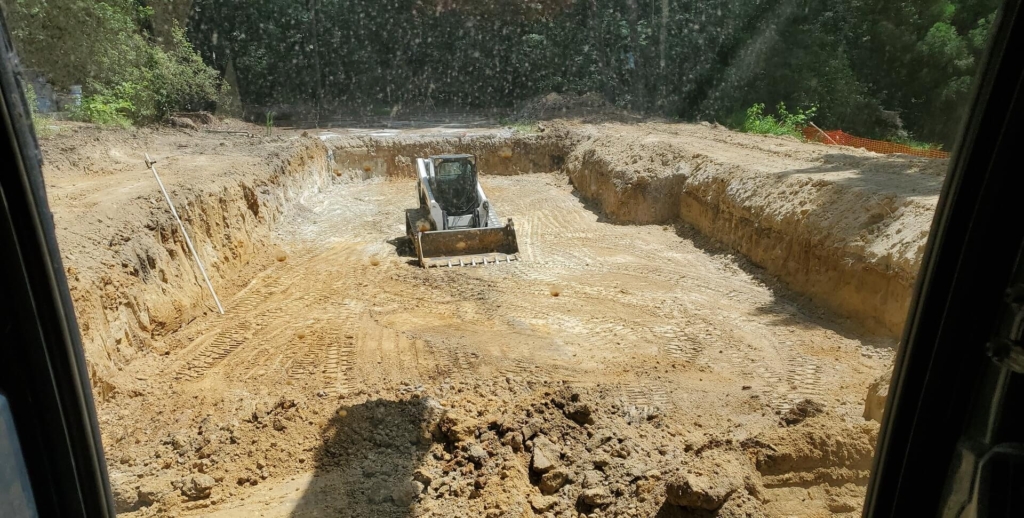
Water can be an asset or a serious challenge on a large property. A properly planned pond, retention area, drainage channel or excavation project can help manage runoff, improve the usefulness of the land and support agricultural, residential or recreational goals.
However, large-scale water-management projects require more than digging a hole or redirecting visible surface water. Soil conditions, drainage patterns, elevations, property boundaries and the intended use of the site all need to be considered.
Here is what property owners in Central North Carolina should know before beginning a pond construction or major drainage project.
Why Do Property Owners Build Ponds?
Ponds can serve several different purposes. Some owners want a recreational or aesthetic feature, while others need water storage or improved management of runoff across a large tract of land.
Common pond projects include:
- Farm and agricultural ponds
- Recreational ponds
- Livestock water sources
- Landscape ponds on large properties
- Retention and detention areas
- Existing pond expansion
- Pond reshaping or reclamation
- Sediment removal and bank improvements
The pond’s purpose will influence its location, depth, shape, slopes and overall design. A pond intended primarily for appearance may have different requirements than one designed to collect runoff or support livestock.
Clearly defining the purpose is one of the most important first steps.
Why Does the Location Matter?
A pond should not be placed solely where it looks best on a property. Contractors and other qualified professionals may need to evaluate topography, natural drainage patterns, soil characteristics, watershed area and access for excavation equipment.
The location may also be affected by:
- Property lines and easements
- Existing utilities
- Septic systems and wells
- Wetlands or regulated areas
- Roads and neighboring structures
- Natural streams or drainageways
- Local permitting requirements
- Equipment access and soil-storage areas
A detailed site evaluation helps identify potential limitations before excavation begins.
What Is Involved in Pond Excavation?
Pond construction typically involves removing and relocating a substantial amount of soil. The contractor must establish the pond’s shape, slopes, depth and surrounding grade while accounting for how water will enter and leave the area.
Depending on the project, the work may include:
- Clearing trees and brush
- Removing unsuitable surface material
- Excavating and shaping the pond basin
- Constructing or improving embankments
- Compacting appropriate soils
- Creating inlet and overflow areas
- Grading surrounding land
- Stabilizing disturbed soil
- Hauling or redistributing excavated material
Before work begins, determine how excavated soil will be handled. Some material may be useful elsewhere on the property, while excess or unsuitable material may need to be hauled away.
What Is Considered a Large-Scale Drainage Project?
Not every drainage concern requires heavy excavation. Minor issues involving gutters, downspouts or small residential drains may be addressed by landscaping, plumbing or drainage specialists.
Large-scale drainage and excavation work may include:
- Major swales and drainage channels
- Retention or detention areas
- Culvert installation or replacement
- Drainage for private roads and long driveways
- Agricultural and equestrian drainage
- Runoff management across large properties
- Regrading substantial areas
- Excavation around construction sites
- Repairing erosion caused by concentrated water flow
These projects typically require heavy equipment and a broader evaluation of how water moves across the entire property.
Treating one wet spot without understanding the larger drainage pattern can transfer the problem elsewhere or provide only temporary relief.
Why Are Grading and Elevation Important?
Water moves according to elevation. Even relatively small changes in slope can affect whether water travels away from structures, collects in low areas or causes erosion.
Professional grading may be used to create controlled slopes, establish channels and direct water toward a suitable outlet or storage area. Contractors must also avoid unintentionally sending additional runoff onto neighboring property or toward roads and buildings.
The goal is not simply to move water as quickly as possible. The project should manage the volume and velocity of water in a way that protects the property and surrounding areas.
What Affects the Cost of Pond and Drainage Excavation?
The investment required for a pond or major drainage project depends on factors such as:
- Size and depth of the excavation
- Soil and groundwater conditions
- Amount of clearing required
- Equipment access
- Volume of material being moved
- Whether soil can remain on the property
- Hauling requirements
- Required pipes, culverts or other materials
- Erosion-control and stabilization work
- Permits, engineering or environmental requirements
- Final grading and seeding
Because many of these conditions cannot be confirmed from photographs alone, an on-site evaluation is often necessary.
Preparing for a Contractor Evaluation
Before contacting a contractor, gather as much useful information as possible:
- Property address and acreage
- Description of the desired pond or drainage project
- The current water problem or project goal
- Photos and videos after rainfall
- Existing surveys or site plans
- Known utilities, easements or septic areas
- Approximate size of the proposed work area
- Desired timeline
- Information about equipment access
For drainage concerns, photos or videos taken during and immediately after heavy rain can be especially helpful because they show how water actually travels across the property.
Pond and Drainage Excavation in Central North Carolina
SG Finch Contracting provides pond construction, grading, excavation, land clearing and large-scale drainage services throughout Fuquay-Varina and surrounding communities in Central North Carolina.
The company’s work is best suited to projects that require heavy equipment and significant excavation, such as pond construction, retention areas, major grading, culverts and water management across larger residential, agricultural or undeveloped properties.
Contact SG Finch Contracting to discuss the property, project goals and scope of work. Providing photos, acreage, location and a description of the issue will help the team begin evaluating whether the project is a good fit.
