
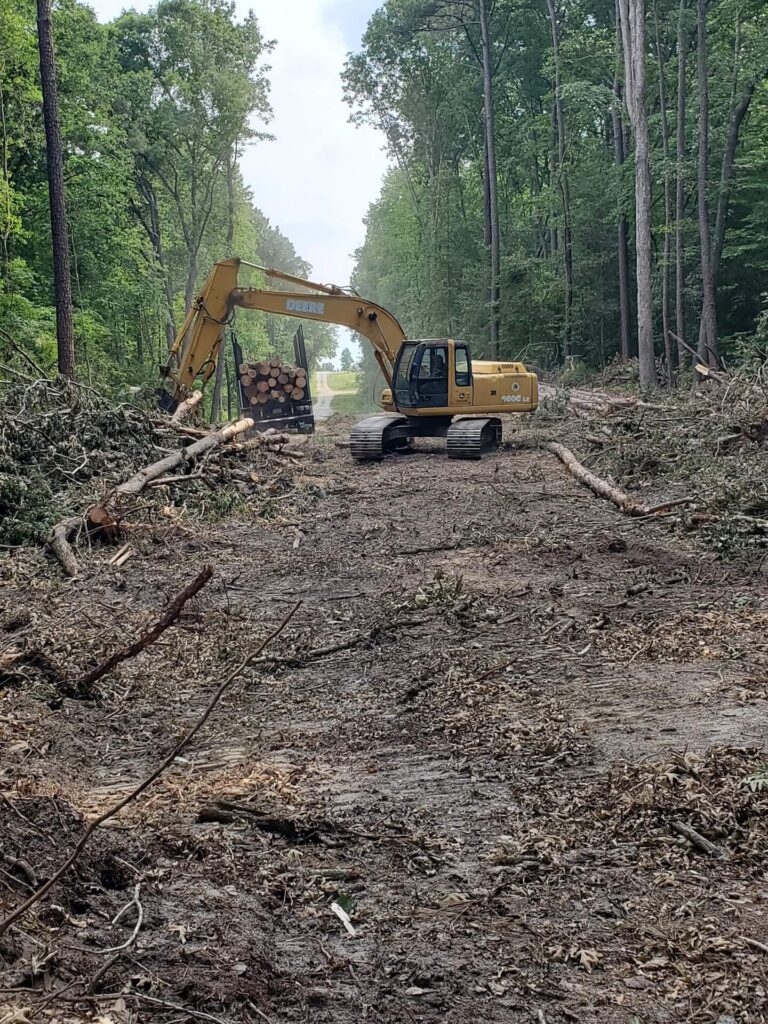
Land clearing is often the first major step in preparing property for a new home, driveway, pasture, commercial project or other improvement. One of the first questions property owners understandably ask is: How much will it cost to clear my land?
There is no single price that applies to every property. Land-clearing costs in Central North Carolina can vary significantly based on the acreage, vegetation, terrain, equipment requirements and intended use of the site.
Understanding the major pricing factors will help you prepare for an estimate and make informed decisions about your property.
How Much Land Needs to Be Cleared?
The total amount of land is an important factor, but acreage alone does not determine the cost. Clearing one acre of lightly wooded, level property may require less work than clearing a smaller but heavily wooded lot with large trees, thick undergrowth or difficult access.
You may also decide that the entire property does not need to be cleared. Selective clearing can preserve mature trees, create privacy buffers and reduce unnecessary disturbance. Before requesting an estimate, consider which areas need to be opened and which should remain natural.
What Is Growing on the Property?
The density and size of vegetation strongly influence the equipment, labor and time required.
A property may contain:
- Grass and light brush
- Dense undergrowth
- Saplings
- Mature trees
- Large stumps
- Storm-damaged or fallen trees
- Vines and invasive vegetation
Light brush and smaller vegetation may be handled with forestry mulching. Larger trees, stumps and construction-site preparation may require traditional clearing methods, excavation equipment and debris hauling.
Because these approaches serve different purposes, the least expensive clearing method is not always the best method for the property’s intended use.
Will Stumps and Root Systems Be Removed?
Cutting a tree and removing its stump are separate parts of the clearing process. If the land will be used for construction, grading, a driveway or another permanent improvement, stumps and major root systems may need to be excavated.
If the property is being cleared for trails, visibility, pasture improvement or general maintenance, forestry mulching may be sufficient for some areas.
Explain your long-term plans to the contractor so the estimate includes the level of clearing and ground preparation the project actually requires.
What Will Happen to the Debris?
Cleared trees and vegetation must be processed, relocated, recycled or hauled away. The chosen method can have a meaningful effect on the project cost.
Possible options include:
- Mulching vegetation in place
- Creating designated brush or wood piles
- Separating usable timber
- Loading and hauling debris
- Transporting stumps and brush to an approved facility
Forestry mulching grinds vegetation and leaves organic material on the property. Traditional clearing may produce larger debris that must be loaded and removed.
Site access and the distance to a disposal or recycling location can also affect hauling expenses.
Does the Land Need to Be Graded?
Land clearing and grading are related, but they are not the same service. Clearing removes trees, brush and other obstacles. Grading reshapes the land to establish appropriate elevations, slopes and drainage.
A property being prepared for a home, building pad, driveway or development may require:
- Rough grading
- Finish grading
- Excavation
- Filling and soil compaction
- Drainage improvements
- Erosion-control measures
- Site-access construction
Including these needs in the initial conversation can provide a more accurate picture of the overall project investment.
How Do Terrain and Access Affect Pricing?
Steep slopes, wet ground, narrow entrances and limited equipment access can make land clearing more complicated. Nearby homes, fences, utility lines and roads may also influence how the work must be performed.
A contractor will need to determine what equipment can safely reach the work area and whether access improvements are needed before clearing begins.
North Carolina soil conditions and periods of heavy rain can also affect when equipment can operate without creating unnecessary damage or delays.
What Information Should You Provide for an Estimate?
To help a land-clearing contractor evaluate your project, be prepared to provide:
- Property address
- Approximate acreage
- Areas you want cleared
- Intended use of the land
- Photos or video of the property
- Known access limitations
- Desired project timeline
- Whether debris should remain or be hauled away
- Whether grading or excavation will also be needed
A property visit may still be necessary, but detailed information can help the contractor determine whether the project is a good fit and what should be evaluated on-site.
Land Clearing in Central North Carolina
SG Finch Contracting provides land clearing, forestry mulching, grading, excavation and site-preparation services for homeowners, builders and landowners throughout Fuquay-Varina and surrounding areas of Central North Carolina.
Rather than estimating a project based only on acreage, the SG Finch team evaluates vegetation, access, terrain, debris handling and the property’s intended use. This helps ensure the proposed clearing method supports what you plan to do with the land afterward.
Contact SG Finch Contracting to request an evaluation for your land-clearing project. Providing the property location, approximate acreage, photos and intended use is a helpful way to begin.
