
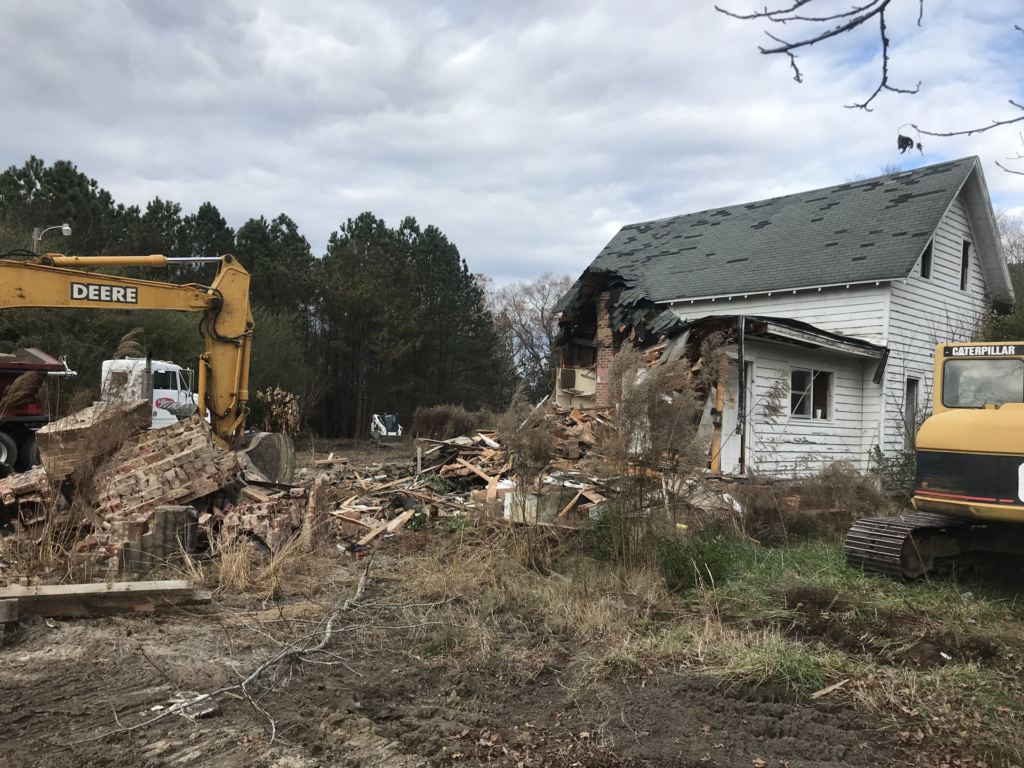
Residential demolition involves much more than simply tearing down a structure. Whether you need to remove an outdated house, damaged mobile home, detached garage, barn or other building, a successful demolition project requires careful planning, safe execution and thorough site cleanup.
Understanding the demolition process can help property owners prepare for the project, compare contractors and determine what questions to ask before work begins.
What Types of Structures Can Be Demolished?
Residential demolition can include the complete or selective removal of many different structures, including:
- Houses and residential buildings
- Mobile and manufactured homes
- Detached garages
- Sheds and workshops
- Barns and agricultural structures
- Fire- or storm-damaged buildings
- Concrete slabs and foundations
- Additions or individual sections of a structure
A complete demolition removes the entire building. Selective demolition targets only part of a structure, such as an addition, garage, porch or interior area. The best approach depends on the property owner’s plans for the site and the condition of the existing building.
What Happens Before Demolition Begins?
Before equipment arrives, the property and structure must be evaluated. The contractor will typically consider the building’s size, construction materials, condition, accessibility and proximity to neighboring properties.
Utilities may need to be located and disconnected before demolition begins. Depending on the project and location, permits, inspections or environmental testing may also be required. Older structures may contain asbestos, lead-based materials or other substances that must be identified and handled appropriately.
Property owners should not assume these preliminary steps are included automatically. Ask the demolition contractor what responsibilities they will handle and what may need to be completed by the owner or another qualified professional.
How Is the Structure Removed?
Once preparations are complete, heavy equipment may be used to dismantle and remove the structure in a controlled manner. The contractor must consider overhead lines, underground utilities, nearby buildings, trees, driveways and other site conditions.
Demolition methods vary based on the structure. A small shed may require a different approach than a full house with a masonry foundation. Contractors may also separate certain materials during the process to make hauling, disposal or recycling more efficient.
Safety and control are especially important on residential properties where neighboring homes, roads or occupied buildings may be nearby.
Does Demolition Include Debris Removal?
Debris removal is a major component of most demolition projects. Removing a building can produce large quantities of wood, metal, concrete, roofing, drywall and other materials.
Before selecting a contractor, confirm whether the estimate includes:
- Loading and hauling debris
- Disposal or recycling fees
- Removal of the foundation or slab
- Removal of buried materials
- Backfilling excavated areas
- Rough or finish grading
- Final site cleanup
A low initial demolition quote may not represent the total project cost if hauling, disposal, foundation removal or grading is charged separately.
What Happens to the Property Afterward?
The condition in which the site is left should be discussed before demolition begins. Some owners only need the building removed. Others need the property prepared for new construction, landscaping, sale or another use.
Post-demolition work may include filling foundation areas, compacting soil, removing remaining debris and grading the site. If a new home or structure will be built, additional excavation, site preparation and drainage planning may be needed.
Using a contractor that can coordinate demolition, hauling, grading and site preparation can create a smoother transition into the next phase of the project.
What Affects Residential Demolition Cost?
Every demolition project is different. Common pricing factors include:
- Size and height of the structure
- Construction materials
- Foundation type
- Site accessibility
- Distance to an approved disposal facility
- Amount and type of debris
- Permit requirements
- Utility preparation
- Environmental testing or remediation
- Grading and site restoration needs
The most accurate estimate will generally require information about the property and an in-person evaluation of the structure.
Residential Demolition in Central North Carolina
SG Finch Contracting provides residential and light commercial demolition services throughout Fuquay-Varina and surrounding communities in Central North Carolina. Services can include structure removal, debris hauling, site cleanup and preparation for the property’s next use.
With more than 30 years of experience in demolition, land clearing, grading and excavation work, SG Finch Contracting can evaluate the entire site—not just the building being removed.
Planning a residential demolition project? Contact SG Finch Contracting to discuss the structure, property conditions and the work needed to leave your site ready for its next phase.
